
Managing Success: A Front-Row Seat to Tuna Management's Next Chapter
By Sam Grimley, Executive Director, Sea Pact
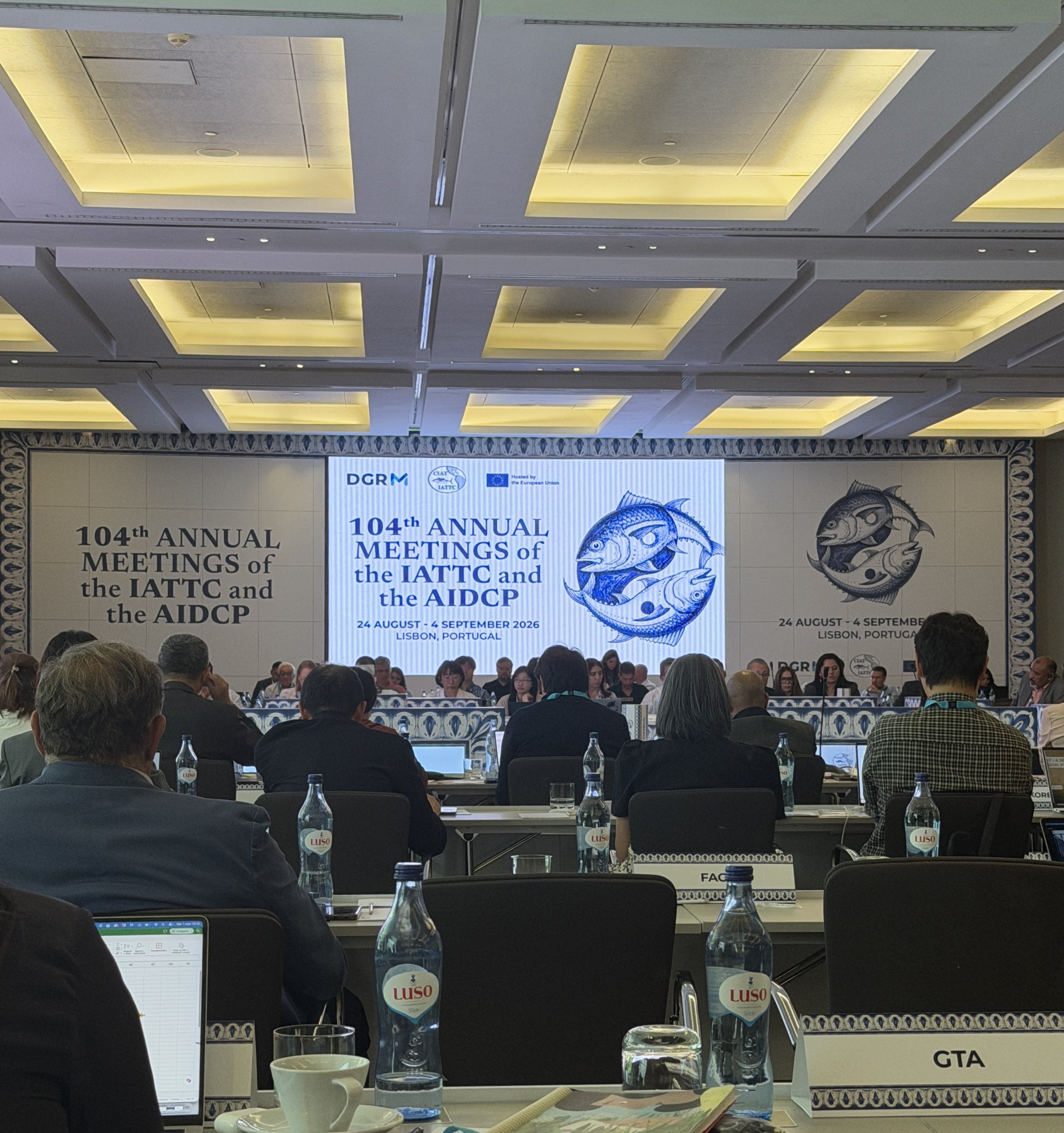
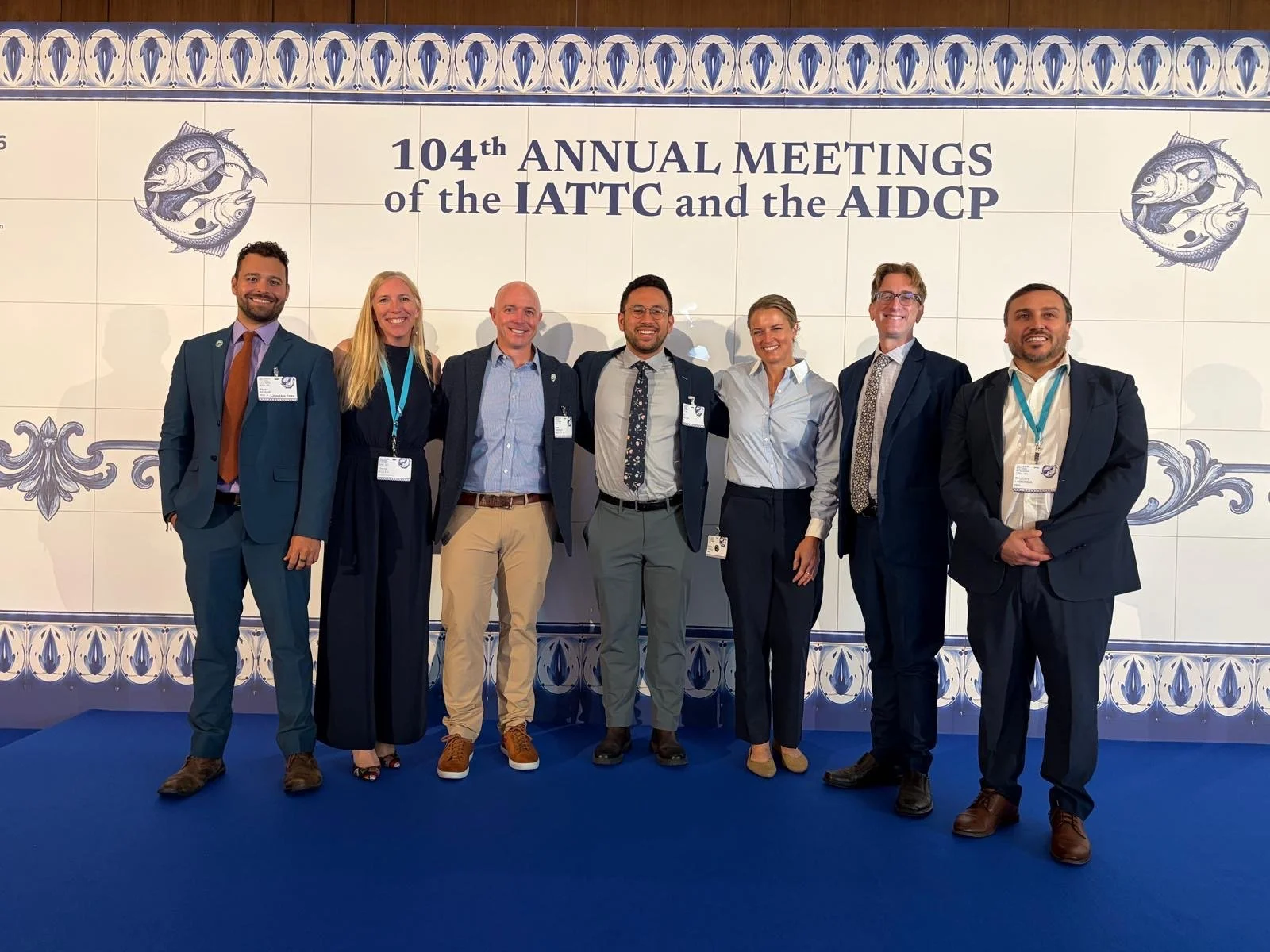
Earlier this month I attended the 104th Meeting of the Inter-American Tropical Tuna Commission in Lisbon, as part of Sea Pact's involvement in the All Tunas 2028 initiative. It was my first RFMO meeting. I've sat through plenty of domestic US fishery management council meetings, so I went in wondering whether it would be similar to those, just scaled up across dozens of countries and languages. There are some similarities, but the differences are significant.
For anyone who hasn't experienced an RFMO meeting, here's what it actually looks like: representatives (delegates) from dozens of countries spend a week in plenary sessions, side rooms, receptions, breakfasts, lunches, and dinners, working through fleet capacity, allocations, catch limits, closure periods, gear rules, and stock assessments that will shape how fisheries like tuna are managed across the Eastern Pacific for years to come. At times it is technical and slow. At other times it moves fast, with debates that stay respectful (usually) but rarely let up. The outcomes, or adopted proposals, matter enormously to everyone in the supply chain, from the vessels on the water, to Sea Pact members, to the retailers and chefs selling seafood to consumers.
This year's meeting came at an interesting time. The tropical tuna stocks, including yellowfin, bigeye, and skipjack, all remained in good condition, and catch levels in the Eastern Pacific climbed well above the ten-year average. That good news on stock health did not automatically translate into agreement on how to manage the fisheries. Many coastal states advocated for more fishing capacity and shorter closure periods, pointing to the healthy stocks as an opportunity for developing nations to grow their fleets, while other members pushed for management procedures that would support stock stability and the long-term sustainability of the fisheries. That divide, between rewarding conservation success and managing it responsibly, was part of nearly every tropical tuna discussion in Lisbon. In the end, members did not land on a long-term management procedure for tropical tunas this year. Instead, the Commission agreed to keep negotiating an interim approach while continuing technical work toward a fuller framework.
I understood why coastal states wanted more capacity. But after about 15 years working across different corners of fishery management, I also recognized the risk of adding capacity before the management framework is ready to handle it. These debates reminded me of the New England groundfish fishery's history, a history I've witnessed firsthand. Before the Magnuson-Stevens Act and enforcement of the US's 200-mile exclusive economic zone (EEZ), foreign fleets regularly fished cod and other groundfish along the New England coast. Once the US pushed those fleets out, it moved to build up its own domestic fishing capacity and subsidized the construction of new vessels to do it. The problem, and hopefully the lesson the Eastern Pacific doesn't have to relearn, was that fleet capacity grew well ahead of the management framework meant to govern it. The cod stocks collapsed after years of overfishing and inadequate management, and the resulting overcapacity eventually forced the US government into a vessel buyback program in the 1990s that came with its own set of challenges.
On a more encouraging note, the clearest highlight of the week was Pacific bluefin tuna. After roughly a decade of joint work between IATTC and its Pacific counterpart, the Western and Central Pacific Fisheries Commission, members adopted a formal management procedure and implementation measure for the stock, a science-based rule that will set catch limits automatically going forward rather than reopening the fight every year. Pacific bluefin's recovery arrived roughly a decade ahead of schedule, and watching the Commission put a lasting framework behind that success was one of the more encouraging moments I witnessed at an RFMO meeting. Questions about how that catch gets allocated among fishing nations remain open, but the core management framework is now in place.
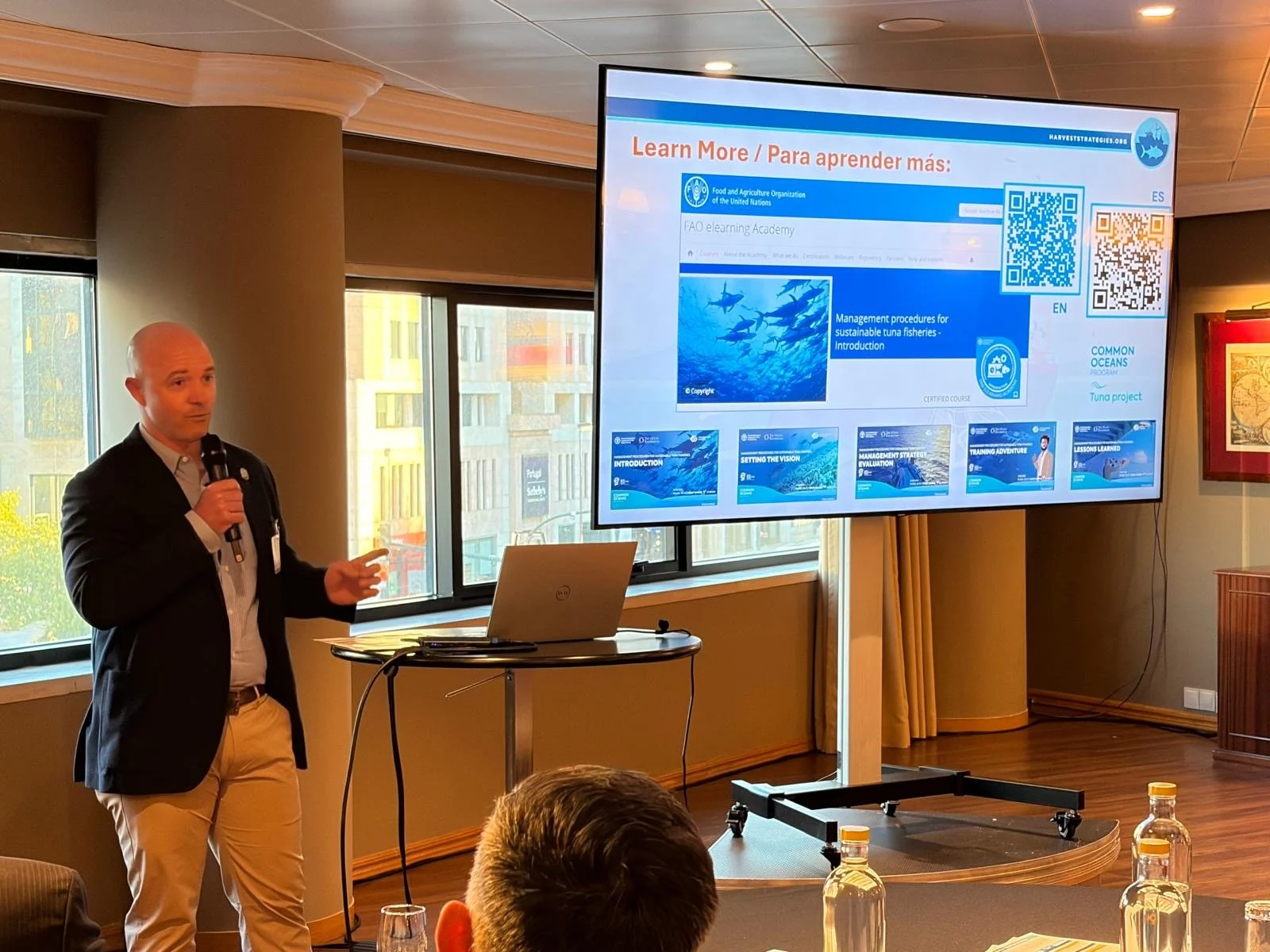
Alongside the formal meeting, I had the chance to speak at an NGO Tuna Forum side event, "A Toast to the Future of Tuna Management," focused entirely on management procedures and the science behind them. It was a genuinely cross-sector discussion with a scientific overview from Shana Miller of The Ocean Foundation , an industry perspective from Dr. Julio Moron of OPAGAC, a government perspective from Ryan Wulff of NOAA, and a seafood company's view from Peter Adame of Lusamerica Foods. My role was to speak about collective supply chain engagement on management procedures, why buyers, processors, and brands have a stake in how these technical rules get built, and how a coalition like Sea Pact can help bring our perspective into that process.
Management procedures are dry on paper, but they determine whether the tuna in our members’ supply chains gets managed on the basis of sound science or are renegotiated every single year. Lisbon reinforced how far this process has come, bluefin's adoption is tangible proof it works, and how much work remains on tropical tuna. We'll keep watching both, and keep showing up to make sure the supply chain's perspective is part of the conversation.